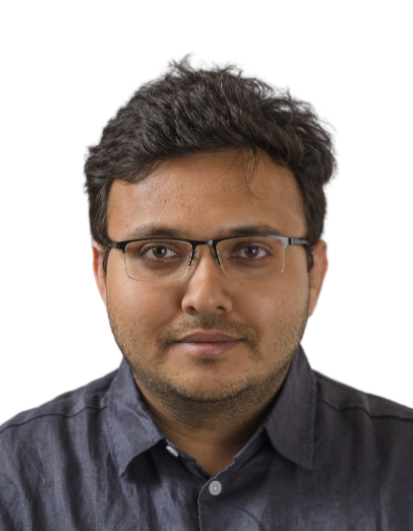
Sourasekhar Banerjee, Ph.D.
AI Application Expert · Sweden AI Factory, NAISS
Building AI systems that are private, adaptive and trustworthy — federated learning, continual learning and IoT security.
About Me
I am currently an AI Application Expert at the Sweden AI Factory, hosted by NAISS, where I organize and deliver training, provide consultancy on AI projects, and build automation that helps researchers and organizations make the most of AI. Previously, I was a Postdoctoral Researcher at the Department of Information Technology, Uppsala University, and I received my Ph.D. in Computing Science from Umeå University.
My research spans federated learning, continual learning, IoT cyber security, image privacy, and autobiographical memory recall, with a focus on building AI systems that are private, adaptive, and trustworthy.
Featured
Quantifying Catastrophic Forgetting in IoT Intrusion Detection Systems
Benchmarking five continual learning methods that let IoT intrusion detectors learn new attacks without forgetting old ones.
Read the paper → Paper · WACV 2026Personalized Image Privacy Advisors via Federated Daisy-Chaining
Federated models that learn each user’s own sense of which photos are private — without their images leaving the device.
Read the paper → Journal · IEEE TAI 2024Cost-Efficient Feature Selection for Horizontal Federated Learning
Choosing the most informative features across clients without sharing their raw data, at low cost.
Read the paper → Learn with meFederated Learning in Five Minutes
What federated learning is, how FedAvg works, and the four challenges that make it a rich research area.
Start reading →Recent News
Research Interests
Personalized & Continual FL
Trustworthy & Explainable FL
Experience




Research Funding


Education
2020 – 2024
Ph.D. in Computing Science
 2016 – 2018
M.Tech. in Computer Science & Engineering
2014 – 2016
M.Sc. in Computer Science
 2011 – 2014
B.Sc. in Computer Science (Hons.)
Technical Skills
Let’s work together
Interested in AI training, help with an AI project, a research collaboration, or an invited talk? I’d be glad to hear from you.
Send me an email →